As a beginner in the world of painting, it’s essential to learn about different techniques and types of paint to develop your talent and explore your artistic potential. Among the many options available, gouache stands out for its simplicity and versatility. In this article, I’ll introduce you to the basics of gouache for painting novices, covering aspects such as choosing materials, basic techniques, tips for creating successful first pieces, and advice for making rapid progress.
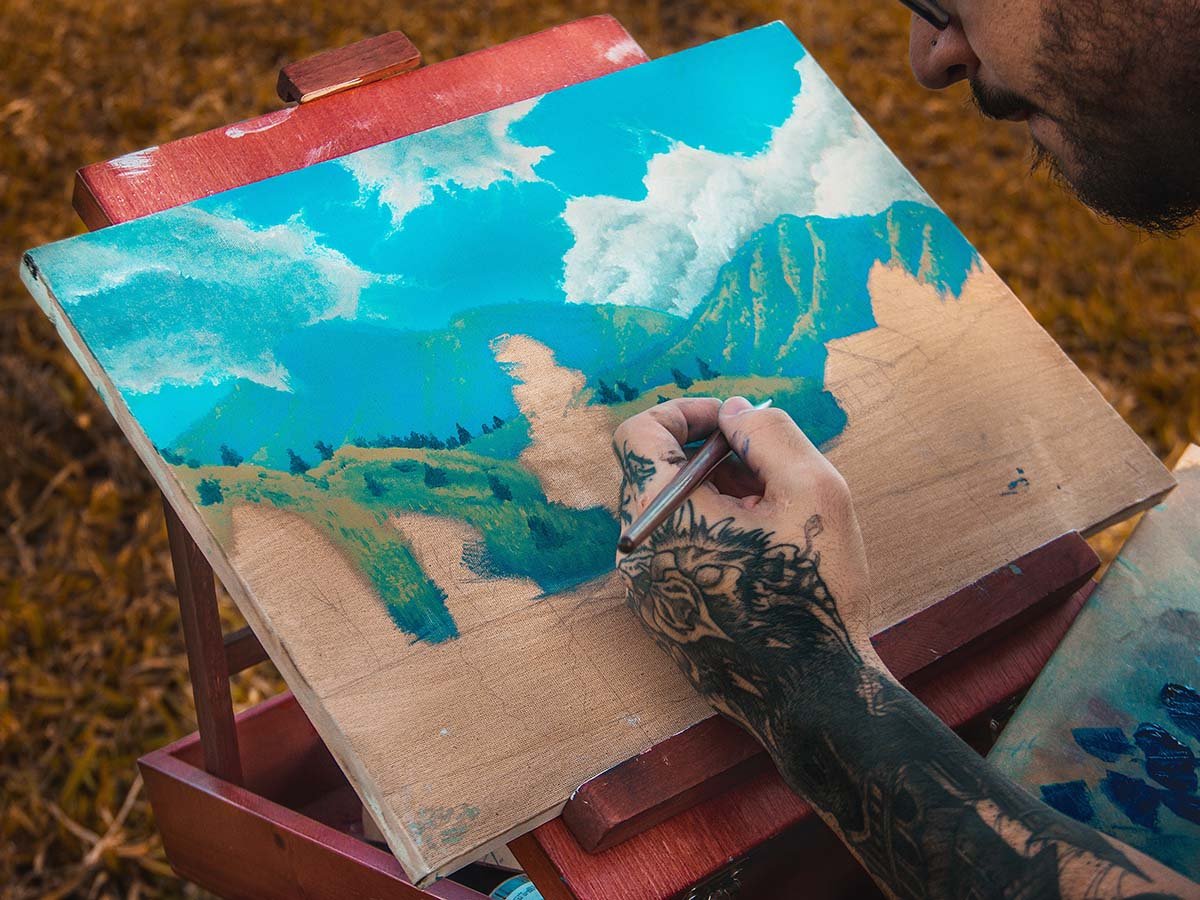
Choosing the right materials to get started with gouache
The first step in learning to paint with gouache is to acquire the right materials. Here is a list of essential items to get started:
Gouache
Obviously, you’ll need gouache to start painting with this technique. Gouache is a water-based paint, somewhere between watercolor and acrylic. It’s available in tubes or pans, and it’s advisable to choose a basic set of colors to begin with: white, black, blue, red, yellow, green, and ochre. You can then expand your palette with other shades according to your needs and preferences.
The paper
Choosing the right paper is crucial for successful gouache paintings. Opt for thick, absorbent paper such as watercolor paper to prevent the paint from bubbling and spreading uncontrollably. A minimum weight of 300 g/m² is recommended.
The paintbrushes
For gouache painting, it’s best to use synthetic brushes rather than natural bristle brushes, as they are more durable and allow for better control of the paint. Have several sizes and shapes of brushes on hand to vary the effects and techniques you use.
Water and the palette
Since gouache is a water-based paint, you will need a container of water to clean your brushes and dilute the paint. Also, have a palette on hand to mix colors and create new shades.
Mastering the basic techniques of gouache
Once you have gathered all the necessary materials, it’s time to familiarize yourself with the basic techniques of gouache painting. Here are the fundamentals you need to know to get started:
Applying the paint
To apply gouache to paper, begin by diluting the paint with a little water using a brush. Finding the right balance between the amount of water and the consistency of the gouache is important to achieve an even layer of paint and a satisfactory result. Too much water and the paint will be too transparent; too little and it will be too thick and difficult to spread.
The use of colors
Gouache is very well suited to color mixing. Don’t hesitate to experiment to create new shades and find the color harmonies you like. Keep in mind that the colors lighten slightly as they dry, so adjust accordingly.
The blending of textures
Thanks to its consistency, gouache allows for a variety of textural effects . By adding more or less water, you can play with the paint’s transparency to achieve watercolor effects, or conversely, create opaque and dense areas of color.
Tips for successfully creating your first gouache paintings
Now that you know the basic techniques of gouache painting, here are some tips to help you succeed with your first works:
Work in successive layers
To achieve a harmonious result, it is recommended to work in successive layers, radially adding colors and details. Start with the largest and lightest areas, then progress towards the details and shadows.
Allow to dry between each coat.
Gouache takes time to dry, and it’s important to let each layer dry before applying the next to avoid unwanted color mixing. You can also use a hairdryer to speed up the drying process.
Protect and secure your work.k
Once your artwork is finished, it is recommended to protect it with a coat of fixative to prevent it from deteriorating over time. You can also frame it under glass to protect it from moisture and dust.
Tips for making rapid progress in gouache painting
Finally, here are some tips to quickly improve your gouache painting skills:
- Practice regularly: as with any artistic technique, practice is the key to making rapid progress in gouache. Try to paint at least once a week.
- Take painting classes: to learn new techniques and receive personalized advice, don’t hesitate to take painting classes, online or in person.
- Study the work of other artists, and observe the works created in gouache by other artists to inspire you with their style and technique.
- Share your achievements: feel free to share your work with others, on social media or in workshops, to receive external feedback and advice to improve.
In short, gouache is an accessible and versatile painting technique, ideal for beginners seeking artistic expression. By choosing the right materials, mastering basic techniques, and following the tips and advice presented in this article, you can quickly create beautiful gouache works and progress in your painting. So don’t hesitate any longer, get started and discover the pleasure of painting with gouache!