There’s nothing more frustrating than a late winter day, that moment when the January chill grips you on the doorstep, and the key suddenly decides it won’t turn. Inserting it is difficult, the rotation catches, and you feel that worrying resistance that threatens the fragile metal of the key. Often, in a knee-jerk reaction, you force it, you get annoyed, and you already imagine the disaster. Yet, before calling an emergency locksmith and watching your post-holiday savings vanish, there’s a solution of child’s play. Often, the problem isn’t the lock’s age, but a simple matter of tension and maintenance, resolvable in minutes with a basic tool that everyone owns.
Landing dramas, why does your lock decide to resist?
A lock rarely jams without warning, but it always seems to choose the worst possible moment to fully manifest itself. Understanding the source of the problem is the first step to avoiding disaster.
The anxiety of a broken key and the immediate fear of the locksmith’s bill
Faced with a stubborn door, adrenaline surges. The scenario is familiar: you force it a little too much, apply lateral force to the key head, and disaster strikes. A piece of metal gets stuck in the lock, making it impossible to open without major intervention. This second of inattention can be very costly. Emergency locksmith services, especially in the evening or on weekends, can reach dizzying heights, sometimes exceeding several hundred euros for a simple door opening. It’s this fear of a hefty bill that often leads people to look for alternatives, but panic sometimes prevents them from rationally considering the mechanical causes of the problem.
Tensions and seizing when the mechanism suffocates under pressure and dirt
A lock is a precision mechanism composed of pins, springs, and moving parts that must fit together perfectly. Over time, several factors disrupt this intricate mechanism. First, dust and microparticles accumulate inside the cylinder, creating an abrasive paste when exposed to winter humidity. Second, temperature fluctuations, common in January, cause the materials to expand and contract, subtly altering the operating clearances. Finally, and this is often the overlooked cause, structural stresses in the building or the door itself exert pressure on the mechanism, preventing it from rotating freely. The metal is eager to move, but it is literally stifled.
The little-known trick rof eleasing the pressure unlocks everything.
Contrary to popular belief, a stiff lock isn’t necessarily a dead lock. The miracle solution doesn’t lie in the costly replacement of the cylinder, but in a subtle manipulation that restores the mechanism’s functionality.
The lifesaving twist slightly loosens the fasteners to restore some play
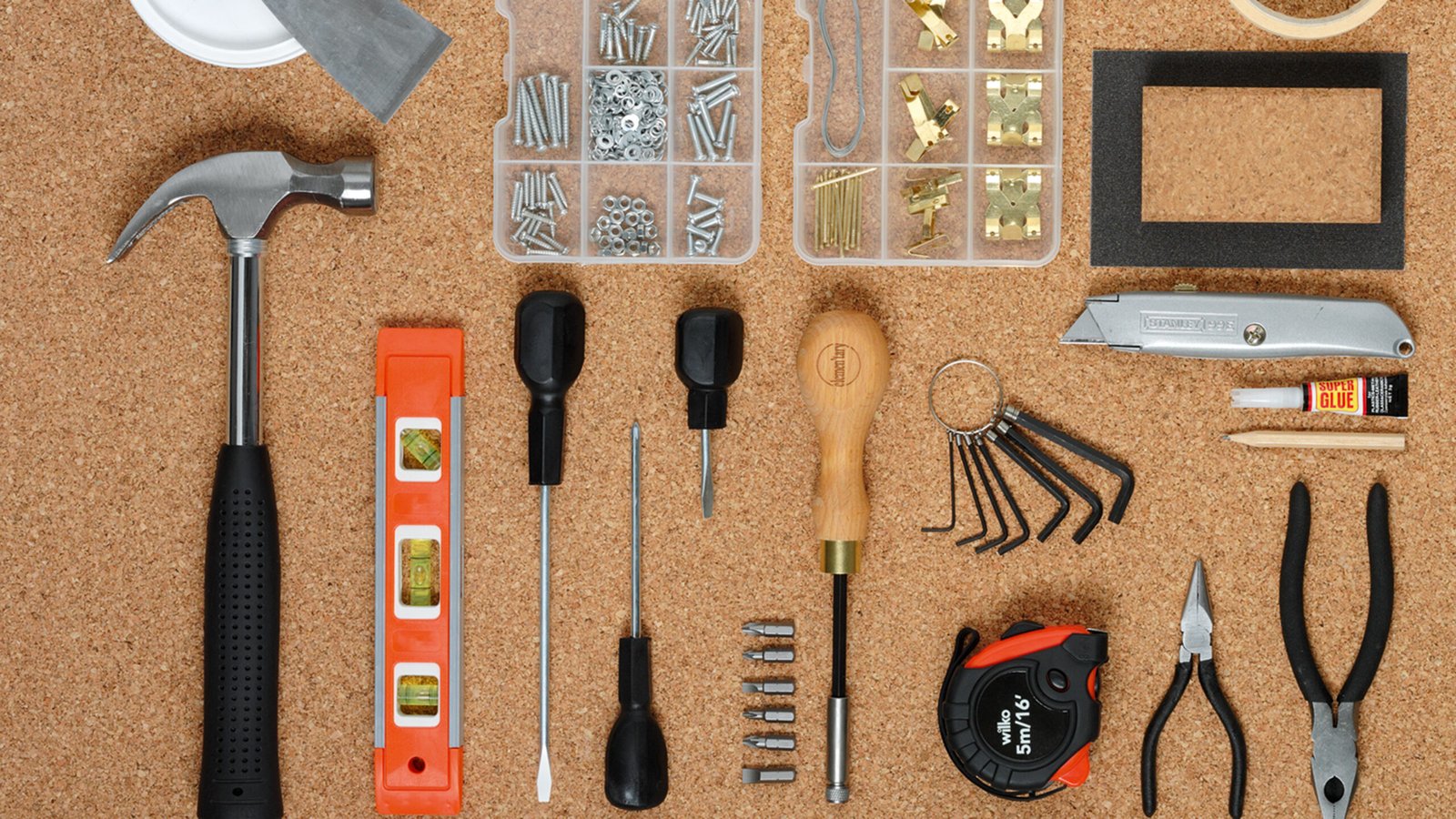
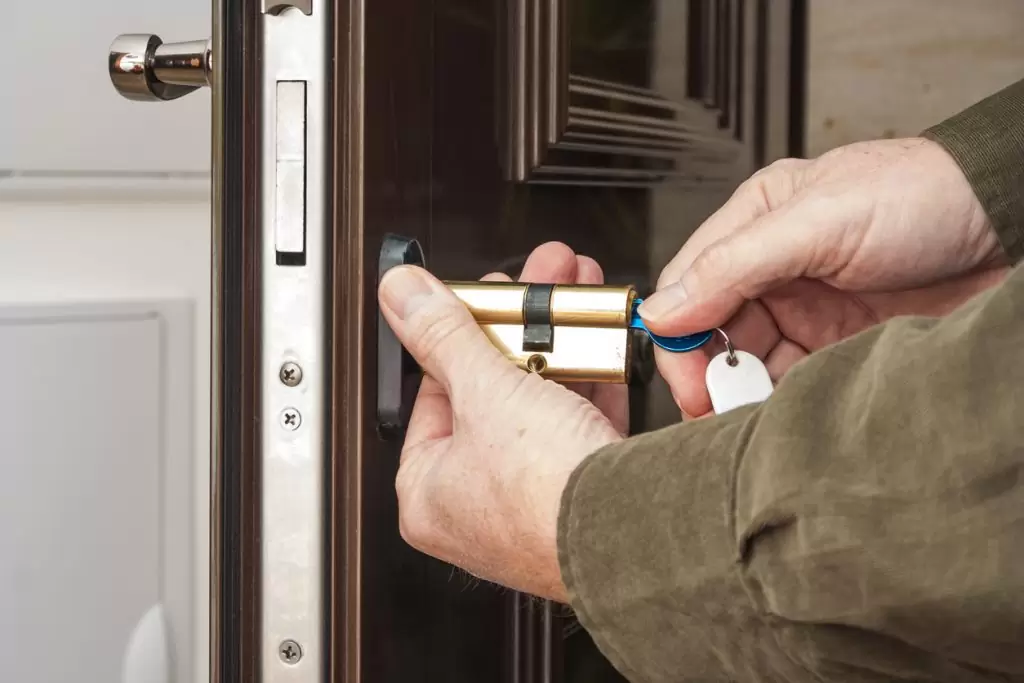
Here’s a secret few people know: slightly loosening the fixing screws can save the day. Often, the screws holding the handles or escutcheons, or even the cylinder retaining screw (located on the edge of the door), are overtightened. This overtightening compresses the internal mechanism and slightly deforms the cylinder body, hindering the pins’ movement. The solution is simple: take a suitable screwdriver and loosen these fasteners by a quarter turn, or even a half turn. You don’t need to disassemble everything,;ust release the tension on the lock body. This tiny bit of play in the metal parts is often enough to eliminate the resistance immediately.
The gentle method lubricates the heart of the mechanism without flooding it
Once the mechanical pressure is released, the internal friction needs to be addressed. Be warned, the reflex to use cooking oil or any other grease is absolutely forbidden: this will eventually damage the mechanism by trapping dust. The mechanism must be lubricated with a suitable product. Ideally, use powdered graphite (a pencil lead rubbed on the key works wonders) or a dry lubricant spray containing PTFE or silicone, specifically designed for locks. A simple spray at the cylinder entrance, followed by several key insertions to distribute the product, will clean the pins and restore smooth operation without clogging the system.
Perfect alignment the finishing touch for a seamless closure
If the key turns effortlessly but the lock still jams when trying to lock the door, the problem lies elsewhere. It’s a matter of geometry
The interplay of the latch and bolt: how to realign them so they fit together perfectly
Over time, or due to variations in the wood’s moisture content during winter, an entrance door tends to warp and sag slightly. As a result, the bolt (the moving part that extends from the lock) is no longer perfectly aligned with the strike plate (the hole in the door frame). When closing, the bolt rubs against the metal of the strike plate, creating this unpleasant resistance. To correct this, you need to observe where the friction is occurring (often identifiable by wear marks on the metal). Then, you can realign the strike plate and bolt by slightly unscrewing the strike plate to move it a few millimeters, or by very carefully filing the metal opening to widen the passage. The goal is to allow the bolt to engage smoothly without hitting the edges.
The verdict–the rotation felt smooth again without having replaced any parts
Once these adjustments are made, the final test is a source of great satisfaction. You insert the key, and you immediately feel the difference. There are no more stiff spots, no more squeaking, no more need to force it with both hands. The rotation becomes smooth and silent . This is concrete proof that the mechanism wasn’t broken, but simply misaligned and under stress. This small DIY victory allows you to regain the comfort of a door that opens and closes as smoothly as the day you bought it, without requiring a complete hardware replacement.
A fully operational entry point and guaranteed savings
In short, home maintenance does not always require great resources, but rather common sense and a little observation .
Three simple steps to remember to permanently banish blockages
To avoid reliving this stress next winter, simply keep this winning trio in mind: loosening, lubrication, and alignment. Checking once a year that the screws aren’t compressing the mechanism, injecting a little specialized lubricant before the coldest weather sets in, and ensuring the door hasn’t shifted guarantees complete peace of mind. These preventative measures take less than five minutes and extend the lock’s lifespan by several years.
DIY satisfaction–an effective repair for free is possible
Beyond the practical aspect, there’s the pride of having solved a household problem yourself. Where others would have spent a considerable sum on a standard replacement, applying these simple mechanical principles allows you to fix the issue for free. It demonstrates that with just a screwdriver and a little logic, you can overcome everyday obstacles and restore flexibility to your home without spending a penny.
Taking care of your home also involves those little details that make a difference in your daily life and save you a lot of hassle. Now that your front door is working perfectly, other mechanisms in your home could also benefit from this same thoughtful attention during your next free moment.