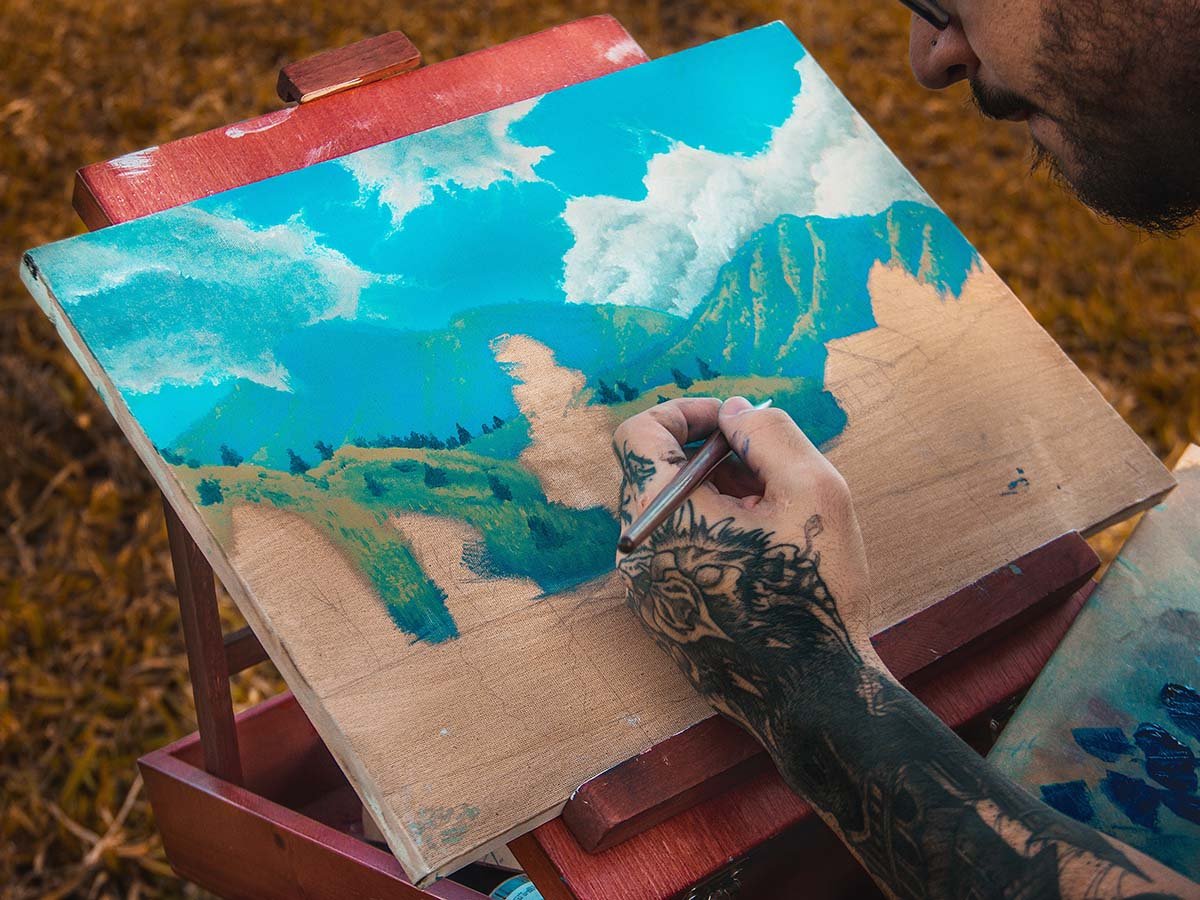
Acrylic painting is one of the most popular techniques among professional painters and art enthusiasts today. Accessible and versatile, it allows you to create works ranging from realism to abstraction, including figurative styles. In this article, I’ll reveal the secrets of acrylic painting for beginners, along with tips and tricks to paint like a pro. On the agenda: training, courses, techniques, colors, materials, and many other surprises!

Why choose acrylic paint to start with?
Acrylic paint is often recommended for beginners for several reasons. First, it’s easier to work with than oil paint or watercolor. Second, it dries quickly, allowing you to work in multiple layers without waiting hours. Finally, it’s water-soluble, which makes cleaning up your equipment easier and avoids the use of harmful solvents.
Furthermore, acrylic paint offers a wide variety of techniques and finishes, making it ideal for exploring different approaches to painting. Here are some tips for getting started with acrylic painting.
Choosing the right equipment
To begin, it’s important to choose the right materials. Here’s a list of essential items for acrylic painting:
- Quality acrylic paints: opt for student or artist quality paints, which offer better pigmentation and a more pleasant consistency to work with.
- Suitable brushes are those specifically designed for acrylics, with synthetic or natural bristles.
- A suitable canvas or support: acrylic paint can be applied to various surfaces, such as paper, wood, or canvas board. Ensure the surface is properly prepared with a primer for better paint adhesion.
- A medium for diluting the paint: water can be used, but a specific medium for acrylic will offer a better finish and better paint adhesion.
- A palette for mixing colors: you can use a plastic, glass o, or ceramic palette, depending on your preferences.
Training and improvement
To improve your acrylic painting skills, it’s advisable to take a course or training program. Numerous resources are available, both online and in person, to help you master basic techniques and become familiar with color mixing.
Among the options are online courses, videos on platforms like YouTube, tutorials, blog articles, and training sessions led by professional painters.
Techniques and tips for learning to paint with acrylics
Start with simple exercises
For beginners, it’s important to start with simple exercises to get a feel for acrylic paint and develop dexterity. Here are a few exercises to try:
- Paint simple geometric shapes (squares, circles, triangles);
- Create color gradients;
- Painting everyday objects (fruit, vase, cup);
- Try out different techniques (knife painting, washes, glazes, etc.).
Experimenting with colors
One of the keys to successful acrylic painting is mastering color mixing. Here are some tips for successful mixing:
- Use a color wheel to help you create color harmonies;
- avor primary colors (blue, red, yellow) and secondary colors (green, orange, purple);
- Don’t hesitate to do some tests on scrap paper before painting on your final surface.
- Give free rein to your creativity and don’t hesitate to experiment with colors!
Painters to follow for inspiration
To improve your acrylic painting skills, it can be helpful to draw inspiration from artists who have made this technique their specialty. Here are a few names to remember:
- René Milon, a Canadian artist who specialized in acrylic landscape painting.
- Gerhard Richter, a German painter who uses acrylics to create abstract and colorful works.
- Marlene Dumas, a South African artist, whose acrylic portraits are imbued with emotion.
Conclusion
Acrylic painting offers numerous possibilities for beginners, and it’s possible to learn quickly thanks to online courses, classes, and tutorials. By choosing the right materials, experimenting with colors, and drawing inspiration from painters, you can progress rapidly and create works you’ll be proud of. So, don’t hesitate any longer: embark on the adventure of acrylic painting and discover the secrets of this exciting technique!